How GTA Real Estate Will Shift Dramatically in the Next 20 Years
How GTA Real Estate Will Shift Dramatically in the Next 20 Years
The Greater Toronto Area real estate market is at a historic turning point.
For the past two decades, the housing landscape has been deeply divided: buyers could either stretch for a detached low-rise home or purchase a compact unit in a high-rise condo tower.
That was the model.
And for 20+ years, it worked.
But today, the GTA housing market is shifting in a way we haven’t seen in a generation.
To understand where we’re going over the next 20 years, we need to understand how we got here.
The Last 20 Years: The Condo Boom Era
In the early 2000s, Ontario’s population was growing rapidly. To manage urban sprawl, the province introduced the Places to Grow Act (2005), followed by the Growth Plan for the Greater Golden Horseshoe (2006).
The goal was clear:
Build up, not out.
Urban Growth Centres across Ontario — from Barrie to Brampton to Vaughan — were pushed to intensify density. And no city felt this shift more than Toronto.
The numbers tell the story:
Year 2000
Low-Rise: 80%
High-Rise: 20%
Year 2020
Low-Rise: 30%
High-Rise: 70%
In just two decades, the GTA transformed from predominantly low-rise construction to overwhelmingly high-rise condo development.
Skylines changed. Investor confidence soared. Pre-construction became a dominant wealth-building strategy.
The secondary rental market — largely made up of condo investors — replaced purpose-built rentals, which had barely been developed for decades.
But then the cycle shifted.
The Market Correction That Changed Everything
Between 2020 and 2022, housing prices surged dramatically. Inflation rose. Construction costs climbed. Interest rates increased rapidly as the Bank of Canada tightened policy.
Suddenly:
• Condo investors faced tighter margins
• Pre-construction risk increased
• Buyers stepped back
• Projects were paused or cancelled
The 20-year condo dominance model hit a wall.
And that forced the industry to adapt.
The Next 20 Years: A More Diverse GTA Housing Landscape
The future of GTA real estate will not look like the past.
Here are the major shifts already underway.
1. The Rise of Purpose-Built Rentals
Developers are pivoting away from condo towers and toward purpose-built rental (PBR) projects.
Why?
Because with government incentives, institutional capital, and long-term rental demand, PBR now makes financial sense again.
Organizations like Canada Mortgage and Housing Corporation (CMHC) are supporting multifamily development through programs like MLI Select, which offers:
• High loan-to-value financing
• Extended amortization periods
• Preferential lending rates
This makes rental-focused development far more attractive than it was even five years ago.
The result?
More professionally managed rental housing and a long-overdue expansion of purpose-built inventory across the GTA.
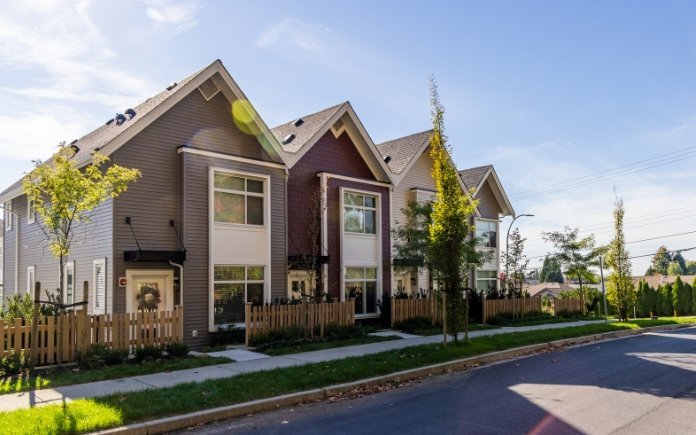
2. The Return of the Missing Middle
Another dramatic shift is zoning reform.
The City of Toronto has opened up large sections of what was known as the Yellowbelt — areas previously zoned exclusively for detached homes.
Now, gentle density is being reintroduced.
This includes:
• Laneway suites
• Garden suites
• Duplexes and triplexes
• Fourplexes and sixplexes
• Low-rise apartment buildings
Even along major corridors, slightly taller townhouses and mid-rise buildings are being encouraged.
Instead of relying almost entirely on 50-storey condo towers, Toronto and surrounding municipalities are embracing diversified housing types.
For the first time in decades, the housing ladder may not jump straight from detached homes to micro-condos.
3. Major Transit Station Intensification
Future growth will cluster around Major Transit Station Areas (MTSAs), where higher density — including 20- to 30-storey buildings — will be concentrated.
Meanwhile, interior neighbourhoods will experience subtle but steady infill development.
This creates a more layered urban fabric instead of a sharp divide between towers and single-family streets.
What Will the GTA Housing Market Look Like in 2045?
If current trends continue, here’s what we can expect:
• A larger share of purpose-built rental housing
• More multiplexes in established neighbourhoods
• Slower, more strategic condo development
• Higher long-term rental participation
• Stronger institutional ownership in multifamily
Homeownership will still exist — but the path to ownership may shift.
With affordability pressures remaining long-term, more Canadians may choose renting over buying, especially if rental supply improves and stabilizes pricing.
That doesn’t mean ownership disappears.
It means ownership becomes more strategic.
What This Means for Mississauga Real Estate
Mississauga is not immune to these shifts.
As part of the Greater Toronto Area, it is also:
• Expanding housing options
• Increasing density near transit
• Encouraging mixed-use development
• Balancing rental growth with ownership demand
For buyers in the Mississauga real estate market, this means today’s low-rise neighbourhoods may gradually see more infill.
For investors, it signals opportunity in small-scale multifamily and rental-focused assets rather than speculative condo flipping.
What Should Buyers and Investors Do Now?
We are currently in a unique window.
The GTA housing market is experiencing:
• Lower pricing compared to peak years
• Increased inventory
• Greater negotiation power for buyers
For first-time buyers, government incentives and softer pricing create an entry opportunity that may not exist once the next cycle begins.
For investors, positioning within the future rental landscape — especially multifamily — could be one of the most strategic long-term plays.
Real estate has always rewarded those who understand structural shifts before they become obvious.
Final Thoughts
The last 20 years were defined by the condo boom.
The next 20 years will be defined by diversification.
More rental.
More missing middle.
More balanced development.
More strategic investing.
The Greater Toronto Area real estate market isn’t collapsing — it’s evolving.
And those who understand where it’s headed will be able to make confident, informed decisions today.
If you want to talk about how these shifts impact your buying or investment strategy in Toronto or Mississauga, let’s have that conversation.
The future of GTA real estate is being shaped right now.